
Most Popular
-
 Retatrutide
Price range: $150.00 through $350.00
Retatrutide
Price range: $150.00 through $350.00
-
KLOW (80mg)
$205.00
-
BPC-157+TB-500 Blend
$110.00
-
Tesamorelin
$140.00
-
CJC-1295 No DAC+Ipamorelin Blend
$140.00

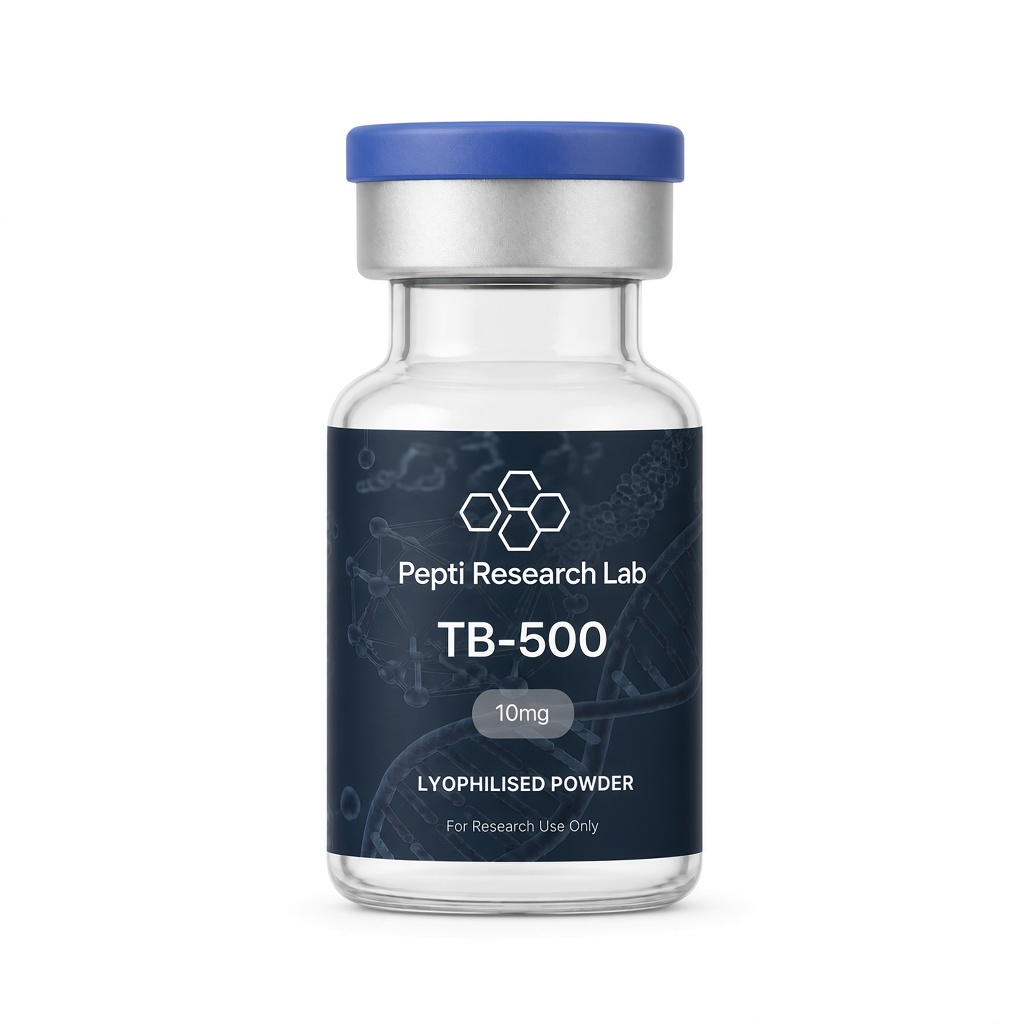
TB-500 is a synthetic fragment of thymosin beta-4 studied for cell movement, soft tissue repair, and blood vessel formation. Most supporting evidence comes from animal and laboratory research.
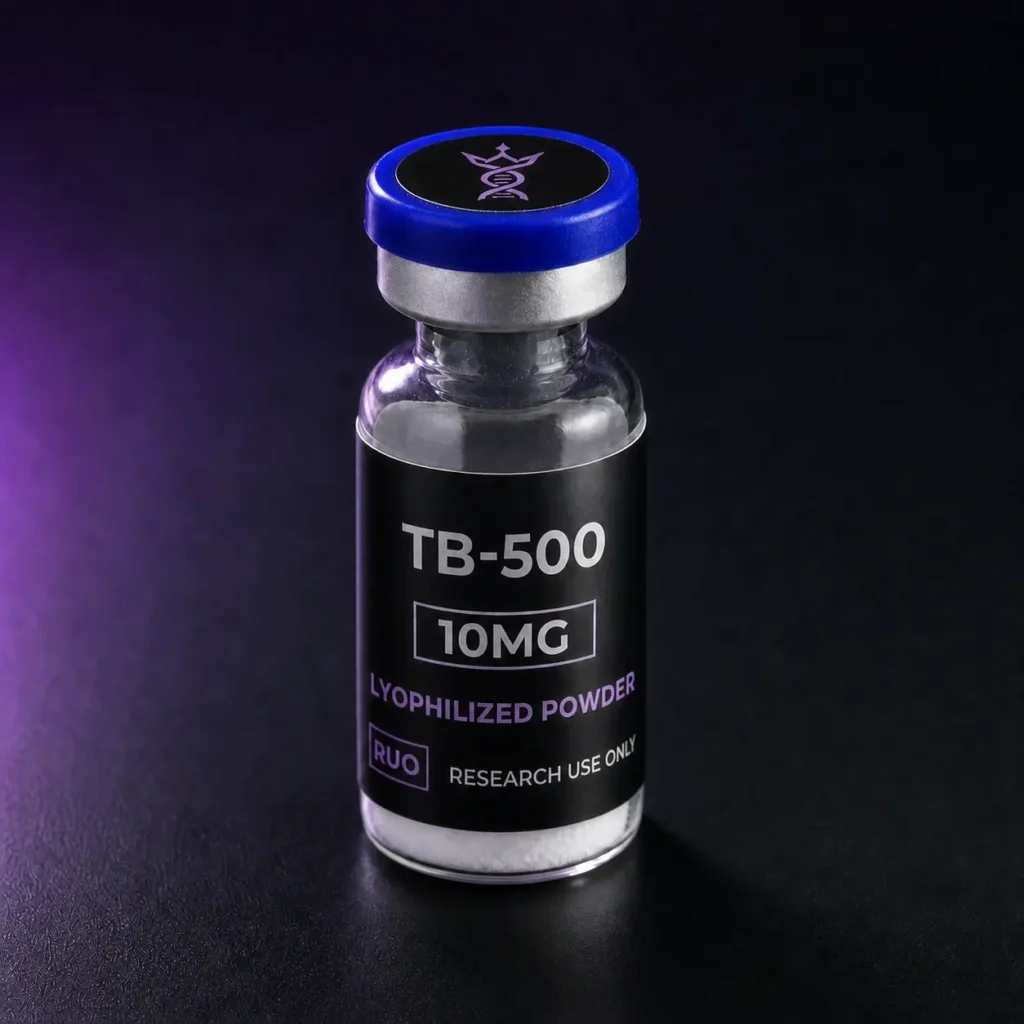
What is TB-500?
Thymosin beta-4 is a protein found in many human and animal cells. It helps regulate actin, a structural protein cells use to move and rebuild tissue.
TB-500 refers to the acetylated seven-amino-acid fragment Ac-LKKTETQ, corresponding to positions 17 through 23 of thymosin beta-4. Product pages often use the two names interchangeably, though research on the full protein does not automatically describe the shorter fragment.
Benefits and uses
Research and reported use focus on four parts of recovery:
- Soft-tissue and muscle regeneration. The most-studied effect. TB-500 promotes cell migration and the actin regulation that lets tissue rebuild, which speeds recovery in animal injury models.
- Blood-vessel formation. It supports angiogenesis — the growth of new blood vessels into healing tissue — improving the blood supply an injury needs to repair.
- Inflammation modulation. TB-500 dampens inflammatory signaling, part of why it is used during recovery.
- Systemic reach. Because Thymosin Beta-4 is present throughout the body, TB-500 is studied for whole-body cell migration and regeneration rather than purely local repair.Axotropin 10 IU(Opens in a new browser tab)
Athletes and other users report less soreness, easier movement, and faster returns to training during TB-500 cycles. Those reports explain its recovery reputation. Published research mainly explores the underlying biology in laboratories and animals.
The distinction between TB-500 and full thymosin beta-4 matters here. FDA’s 2026 review found that studies submitted for wound healing used the full protein, while no human study had administered TB-500 itself.
TB-500 vs BPC-157 and why people stack them
TB-500 and BPC-157 are a common reported recovery pairing. Users assign BPC-157 a local repair role and TB-500 a broader cell-migration role.
The BPC-157 and TB-500 stack guide covers reported schedules, blend terminology, and the rationale people use for combining them. The popularity of the pairing runs ahead of direct human research on the combination.
For the broader recovery protocol, compare TB-500 with other healing and recovery peptides, and see KPV for the anti-inflammatory addition.
How it works
The proposed mechanism centers on actin, the protein that drives cell movement. In thymosin beta-4 research, actin regulation helps repair cells move toward damaged tissue.
Related laboratory work also examines angiogenesis and inflammatory signaling. These mechanisms give researchers concrete recovery questions to test, while direct TB-500 outcome studies remain the missing step.
Dosage and administration
Reported protocols usually use subcutaneous injection and a loading-then-maintenance pattern. A higher loading phase commonly runs for four to six weeks, followed by a lower maintenance phase.
These schedules describe current practice around an unapproved peptide. The amount and frequency vary across clinics, products, and goals.
Freeze-dried vials require reconstitution before use. The peptide dosage calculator converts a supplied dose, vial strength, and water volume into syringe units.
Side effects and safety
Users commonly report injection-site reactions, fatigue, a head rush, or lightheadedness shortly after a dose. These reports describe what people notice, although controlled studies have not measured how often each effect occurs.
FDA found no human exposure data or animal toxicology program for TB-500. It also identified concerns relevant to injectable peptides, including immune reactions, aggregates, impurities, and product sterility.
Legal status and how to get it in 2026
The FDA removed TB-500 from its Section 503A Category 2 list in April 2026.
On , an FDA advisory committee recommended adding it to the Section 503A Bulks List. The committee considered wound healing.
The vote was advisory. It was not drug approval, and the FDA has not made a final decision. Current access rules remain unchanged.
Products sold online for research use are not approved for human use. Their identity, strength, and quality may be uncertain.

Testimonials

Sabina
Duis aute irure dolor in reprehenderit in voluptate velit esse cillum dolore

Rex
Duis aute irure dolor in reprehenderit in voluptate velit esse cillum dolore

About Us

Duis aute irure dolor in reprehenderit in voluptate velit esse cillum dolore eu fugiat nulla pariatur
Know More
Leave a Reply